
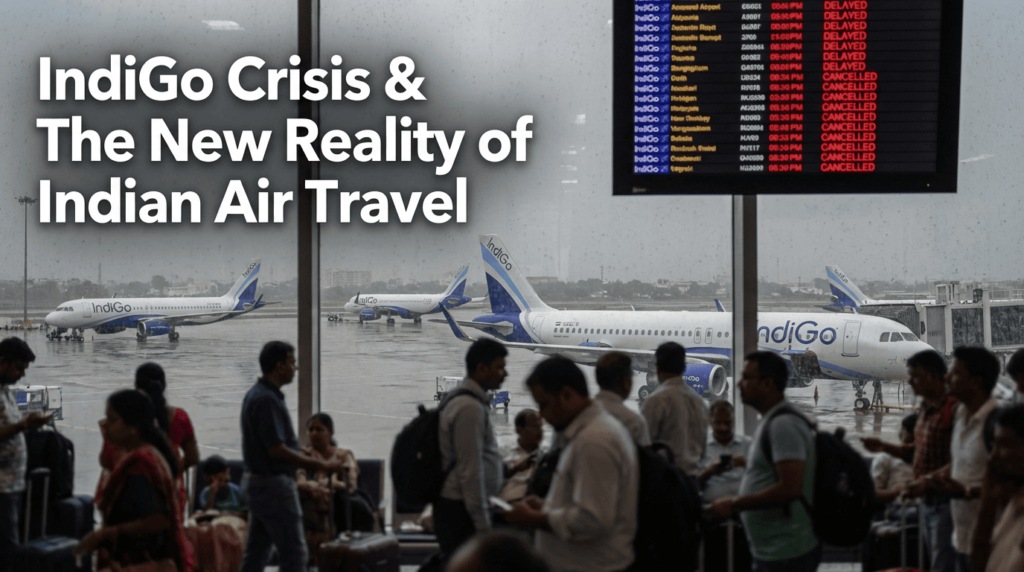
The recent IndiGo flight disruptions and mass delays across India sparked nationwide frustration and created a wave of public debate about the reliability of Indian airlines. Thousands of passengers faced cancellations, extended wait times, and unexpected losses — leading to a direct shift in consumer sentiment, not just toward IndiGo but toward the aviation industry as a whole.
This incident has turned into a critical moment of insight for airlines, travel companies, and brands dependent on consumer trust.
Here’s what the crisis reveals — and why understanding consumer behaviour now matters more than ever.
What Triggered the IndiGo Crisis?
While multiple operational and staffing-related challenges were reported, what mattered more was how passengers felt:
- Loss of trust and safety concerns
- Fear of unexpected disruptions
- Anger over poor communication and support
- Strong emotional reactions amplified by social media
For consumers today, experience is everything, and when it fails — brand loyalty collapses immediately.
Consumer Sentiment Shift: What the Public Reaction Shows
The aviation industry is witnessing a shift in expectations:
- Transparency over perfection — passengers want real-time updates and honesty
- Faster service and resolution for refunds, rebooking and claims
- Reliability over low price — people prefer paying more for stress-free travel
- Emotional reassurance — empathy matters more than policy
The IndiGo situation has become a case study in the power of collective consumer voice, proving that customers now hold stronger influence than brand messaging.
Impact on Customer Behaviour & Travel Decisions
1. Switching to Competitor Airlines
Travelers are actively comparing airlines and shifting preferences based on service reliability, not discounts.
2. Rise in Last-Minute Bookings & Flexible Travel
People are hesitant to commit early due to fear of change or cancellation costs.
3. Surge in Travel Insurance & Refund-Friendly Services
Customers are prioritising protection and peace of mind over convenience.
4. Increased Social Media Pressure
A single viral complaint can impact brand reputation nationwide.
What Brands Can Learn from the IndiGo Crisis
This moment teaches every business (not just airlines) the same core lesson:
Consumer perception can change overnight — and the only defence is proactive communication and data-driven customer understanding.
🔍 1. Listen to Consumer Sentiment in Real Time
Use surveys, live feedback tools, and social listening to measure brand health continuously.
📢 2. Communicate Early, Fast & Clearly
Silence feels like neglect — immediate transparency builds credibility.
🤝 3. Human-Centric Experience Wins
Empathy, apology and support resolve anger better than policy statements.
📈 4. Invest in Reputation Monitoring
Brands must actively track trust, satisfaction levels and online sentiment.
🧠 5. Data-Driven Decision Making is Non-Negotiable
Understanding what consumers think, feel and expect helps avoid large-scale damage.
Why This Matters for All Brands
The IndiGo disruption has become more than a travel problem — it’s a wake-up call for every business:
- Customer expectations are rising faster than operational capabilities
- Emotional experience is now a measurable competitive advantage
- Reputation management must be proactive, not reactive
Companies that adopt rigorous market research, customer analytics and sentiment tracking will grow faster and maintain loyalty even during crises.
How Cogentix Research Helps Brands Stay Ahead
At Cogentix Research, we help brands:
- Understand real-time consumer sentiment & behaviour
- Conduct industry-specific market research & customer feedback studies
- Track brand trust, loyalty and reputation changes
- Predict emerging shifts before they hit the market
- Build strategies based on deep insights, not assumptions
In uncertain times, data is the strongest defence and the smartest investment.
Final Takeaway
The IndiGo crisis proves one thing:
Customer emotions shape brand destiny.
Brands that listen, adapt and respond quickly will win the future of consumer loyalty.